
Skip to content
Free written estimatesLocal crews
Call now (281) 555-0191
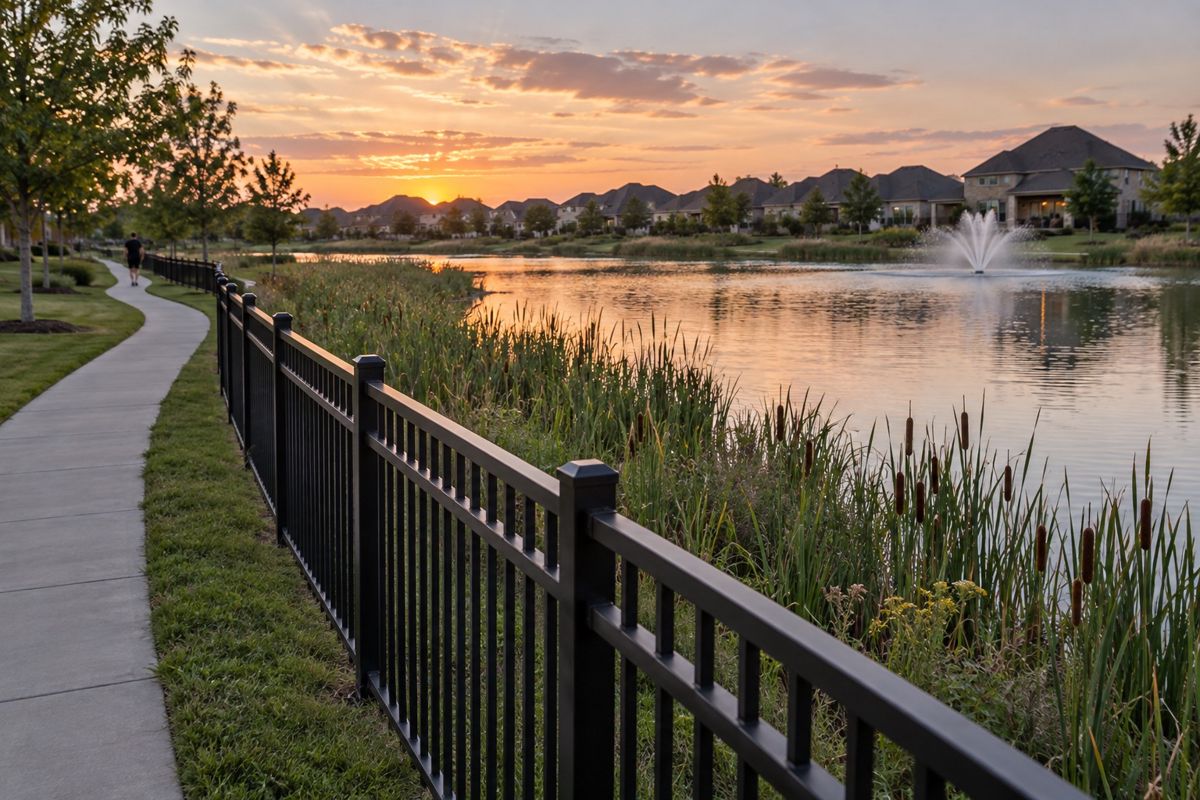
Black aluminum fence beside a neighborhood pond in Texas

Aluminum and ornamental iron

Aluminum fence installation in Cypress for pools, ponds and curb appeal

Black ornamental aluminum and iron fences that keep the view open and meet the rules many Cypress HOAs set.

  • Powder-coated aluminum and ornamental steel
  • Pool barrier and pond lot styles
  • Gates with proper latches and hinges

Step 1 of 3

What do you need?

Why do so many Cypress lots use ornamental aluminum?

Walk around a Cypress community and you will see black open-picket fences on lake lots, greenbelts, front yards and pool areas. There are two reasons. First, many HOAs and builders require open fencing where the lot backs up to water or common space, so the view stays open for everyone. Second, aluminum is made for this climate. It does not rust, handles humidity and rain well, and needs little care beyond an occasional rinse.

Aluminum does not give privacy. If that matters, pair it with plantings or choose wood for the sides that need screening. Owners often combine them, with aluminum facing a pond and wood along the neighbors.

Aluminum or ornamental iron: what is the difference?

The two look similar from the street, but they behave differently.

Aluminum

Aluminum is light, does not rust and comes with a baked-on powder-coat finish. It suits residential yards, pool fences and most HOA lots. It is not as heavy or as strong as steel, but good commercial-grade styles are sturdy enough for everyday use.

Ornamental iron and steel

Steel is heavier and stronger, and it can be welded into custom shapes and large gates. In humid places, though, it will rust where the coating chips, so it needs touch-ups and good finishing. It is a stronger choice for security, driveways and larger gates.

Ask what the finish is, how it is applied and what the manufacturer warranty covers.

What are the pool fence and HOA rules for aluminum fencing?

Aluminum is a popular choice for pool barriers, and pool codes are specific. Local rules commonly call for a barrier at least about four feet high, with gaps small enough that a child cannot squeeze through, and a gate that closes and latches on its own. Some places also set the latch height and which way the gate opens. These rules are set locally and checked when the pool permit is reviewed, so ask your city or county what applies.

HOA rules often cover color, height and picket style. Black is the usual choice, and many committees ask for a specific style, such as flat-top rails. Submit the plan before ordering. Where the fence meets a pond, check any district or easement rules too.

Price comes down to these points:

  • Material and gauge. Heavier aluminum and steel cost more than light residential panels.
  • Height and length. A tall fence takes more material, and long runs add posts.
  • Ground and slope. Cypress is mostly flat, but drainage swales and uneven lots need racked or stepped panels.
  • Gates. Walk gates, double drive gates and automatic openers add cost. See gate automation for what that involves.
  • Finish and style. Decorative tops, scrolls and custom shapes cost more than plain pickets.
  • Permits and approvals. Pool barriers and HOA reviews can affect the schedule.

You get a written quote with each of these spelled out.

How long does it take and what happens on install day?

Many aluminum fences are made from stock panels, so once approvals are in the work moves quickly. Custom iron can take longer because it is made to order. After utilities are marked, the crew digs and sets posts in concrete and gives it time to cure. Then panels are fastened or welded, and gates are hung and adjusted.

Plan for a few working days for a typical backyard or pool run. Wet weather can slow digging in clay. Remove loose items near the line, tell us where sprinklers and pool equipment run, and keep pets inside. At the end we test the gate latch and go over the finished fence with you. Back on the home page you can see every material we install, including vinyl.

Free written estimates
Local crews
Clear timelines
Cleanup included

How it works

1

Tell us about the fence

Length, style and goals.

2

Site visit and quote

We measure and put the price in writing.

3

Installation

Posts set properly, gates hung true, site cleaned.

Request aluminum and iron

Tell us what you need and we call you back.

No obligation.

Step 1 of 3

What do you need?

Questions about fencing in Cypress

Will aluminum fencing rust near a Cypress pond or pool?

Aluminum itself does not rust, which is why it is common near water and pools. The powder-coat finish can still scratch or fade over time, and steel parts like screws and some hinges can corrode. Ask what hardware is used and whether it is stainless or coated. A quick rinse and an occasional check keep it looking good.

Is an aluminum fence strong enough for dogs and kids?

Residential aluminum is sturdy for normal use, and heavier commercial-grade styles are stronger still. Small dogs may slip through wide pickets, so picket spacing matters. Tell us about your pets and children and we will suggest a style. For a pool, the spacing must also meet local barrier rules.

Can aluminum fences follow a slope or drainage swale?

Yes. Most aluminum systems can rack, meaning the panel tilts to follow a gentle slope, and steeper changes use stepped sections. Drainage swales also need attention so water can flow. Walk the line with the installer so they plan for the dips and the water path before ordering panels.

Do I need approval before installing an aluminum fence?

In most HOA neighborhoods, yes. Many committees want the style, height and color approved first. A pool fence may also need a permit and inspection from your city or county. We can supply material details for your application, but you decide what to submit and the committee or city decides what is approved.

How is aluminum different from wrought iron for gates?

Aluminum gates are lighter and do not rust, so they are easier on hinges and openers. Steel or iron gates are heavier and stronger, which suits large drive gates and security, but they need more upkeep in humid air. Match the gate to its size, use and opener. We can explain options on a site visit.

Ready when you are. Call now or request a quote online.

Get my free fence quote