
Skip to content
Free written estimatesLocal crews
Call now (281) 555-0191
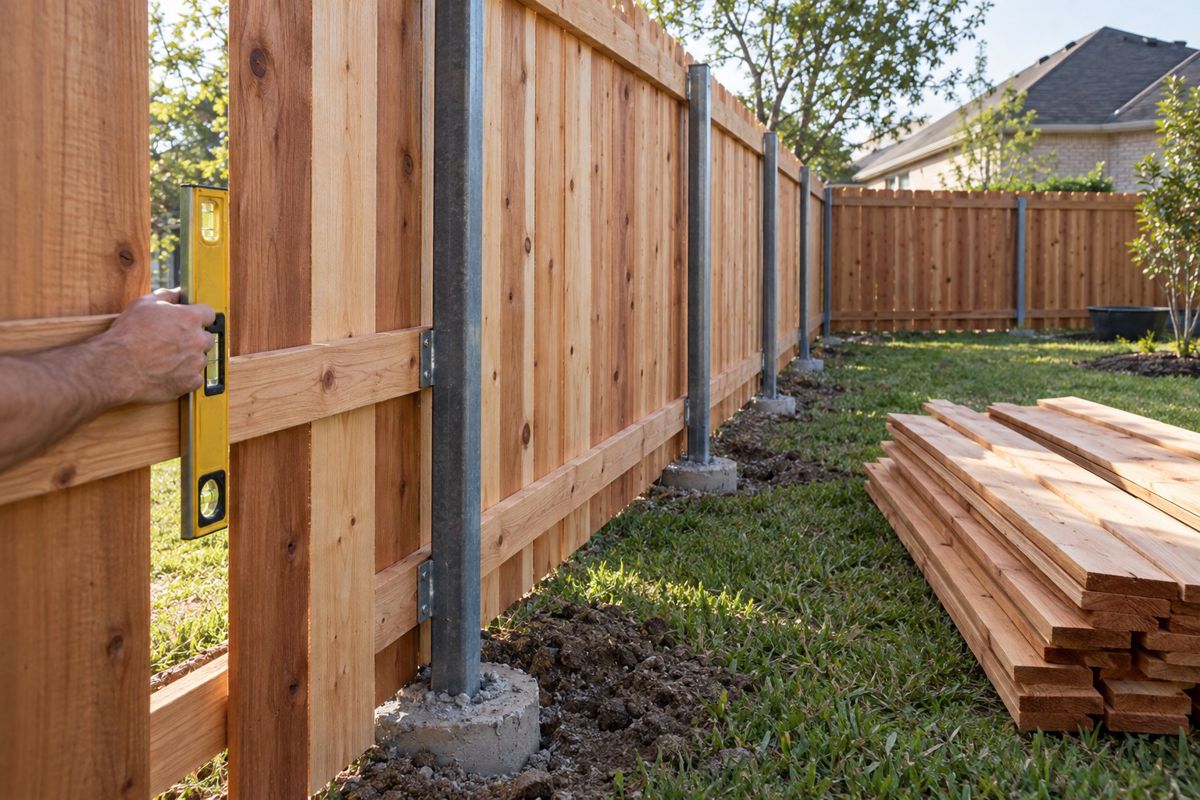
Cedar board-on-board fence being built with steel posts

Wood fencing in Cypress, TX

Wood fence installation in Cypress that stands up to clay and wind

Cedar and treated pine privacy fences, planned around your HOA, your survey and the soil under your yard.

  • Cedar, pine and board-on-board styles
  • Posts set for clay soil movement
  • Written quote before materials are ordered

Step 1 of 3

What do you need?

What does wood fence installation in Cypress involve?

A wood privacy fence looks simple from the street, but the real work is underground and in the planning. A good job starts with a walk of the property line, a check of the survey and a plan for gates, slopes and trees. Then utility lines are marked, post holes are dug, posts are set in concrete, rails go on, and pickets are fastened.

In Cypress the post is the part that decides how long the fence lasts. The clay soil under most yards swells after heavy rain and shrinks in dry heat. A shallow post gets pushed and pulled until it leans. For that reason we talk about hole depth, concrete, and drainage at the base before we talk about picket style.

If you are weighing wood against other materials, our pages on vinyl fencing and aluminum and iron fencing explain how they compare. You can also start from the main page to see every service.

Which wood is better here: cedar, pine or something else?

Both cedar and treated pine are common across Cypress, and each has a place.

Cedar

Cedar resists rot and insects better on its own, looks good with a clear or tinted sealer, and tends to stay straighter. It usually costs more up front.

Treated pine

Pressure-treated pine is more budget friendly and handles ground contact better than untreated wood. It can twist or crack as it dries, so fasteners and board selection matter.

Post choices

Many owners now choose steel posts with wood pickets, or treated wood posts with a metal cap rail, because humidity and ground moisture attack wood posts first. Steel costs more but can outlast the boards around it. Whatever you choose, ask what species, what grade and how the posts are protected where they meet the soil.

How do HOA rules and property lines affect a wood fence?

Most Cypress neighborhoods sit inside an HOA, a municipal utility district or both. Many HOAs set the maximum height, the picket style, the stain color and even which side the rails face. Some want an application with a sketch, a survey and a material sample. Approval can take a while, so start early.

Property lines matter too. A survey shows where the boundary sits and where utility easements run. Fences built in an easement may have to be removed if a utility needs access. We do not decide your boundary, but we can build to the line you give us and flag easements we see on the plat.

Talk to your neighbor before work starts. Texas does not generally force neighbors to split the cost of a fence, so agree on who pays and which side the finished face sits before the quote is signed.

Price depends on a short list of choices and site conditions:

  • Length and height. More feet and taller boards mean more material and more digging.
  • Wood species and grade. Cedar costs more than treated pine, and upgraded grades cost more again.
  • Post type and spacing. Steel posts, tighter spacing and deeper holes add cost and add strength.
  • Style. Board-on-board, capped tops and trim take more labor than a basic dog-ear picket.
  • Gates. A walk gate or a wide drive gate needs heavier posts and better hardware.
  • Access and removal. Tear-out of an old fence, tight side yards and roots all add time.

We quote in writing so you can compare line by line.

How long does it take and what happens on install day?

Once permits or HOA approvals are in and materials are ready, a typical backyard fence goes up over a few working days. Wet weather can slow digging in clay, and concrete needs time to cure before the weight of the fence goes on, so we do not rush that step.

On the first day, the crew marks the line, digs and sets posts. Rails and pickets follow. Gates are hung last so they can be adjusted to a settled frame. Plan to move cars, trim back plants along the line and secure pets. We clear scrap and walk the finished fence with you.

Sealing or staining is a separate decision. New wood often needs time to dry before a finish goes on. If you also have a leaning older section, see our page on fence repair and gates to decide whether to fix or replace.

Free written estimates
Local crews
Clear timelines
Cleanup included

How it works

1

Tell us about the fence

Length, style and goals.

2

Site visit and quote

We measure and put the price in writing.

3

Installation

Posts set properly, gates hung true, site cleaned.

Request wood fencing

Tell us what you need and we call you back.

No obligation.

Step 1 of 3

What do you need?

Questions about fencing in Cypress

How deep should fence posts be in Cypress clay?

A common rule of thumb is to bury about a third of the post length, and clay soil is a good reason to go deeper and use enough concrete. Exact depth depends on fence height, soil and drainage. Ask any contractor how they handle it and what depth they plan for your fence.

How long will a wood fence last in Cypress?

It depends on the wood, the posts and upkeep. Humidity, heavy rain and summer sun all wear on wood, and posts near the ground fail first. Well-built fences with good sealing and drained posts can last many years, while a fast, shallow install may start leaning much sooner. Regular checks and resealing help.

Should I stain or seal a new wood fence?

A sealer or stain slows moisture damage and sun bleaching, which matters in this climate. New boards often hold moisture, so many owners wait a period before finishing. Check your HOA first, since some require a specific stain color or limit finishes. Reapply on a schedule that suits the product you choose.

Can I build a wood fence on the property line?

Often a fence sits right on or just inside the line, but the survey and any easements decide what is allowed. Talk to your neighbor and confirm the boundary before work starts. We can build to the line you point out, though we do not settle boundary disputes.

What height can a backyard wood fence be?

Six feet is the usual height for a privacy fence, and many HOAs cap it there. Taller fences may need approval from your HOA or city, and front-yard fences are often held to lower limits. Check your deed restrictions before choosing a height so you do not pay to redo it.

Ready when you are

Call now or request a quote online.

(281) 555-0191
Get my free fence quote