
Skip to content
Free written estimatesLocal crews
Call now (281) 555-0191
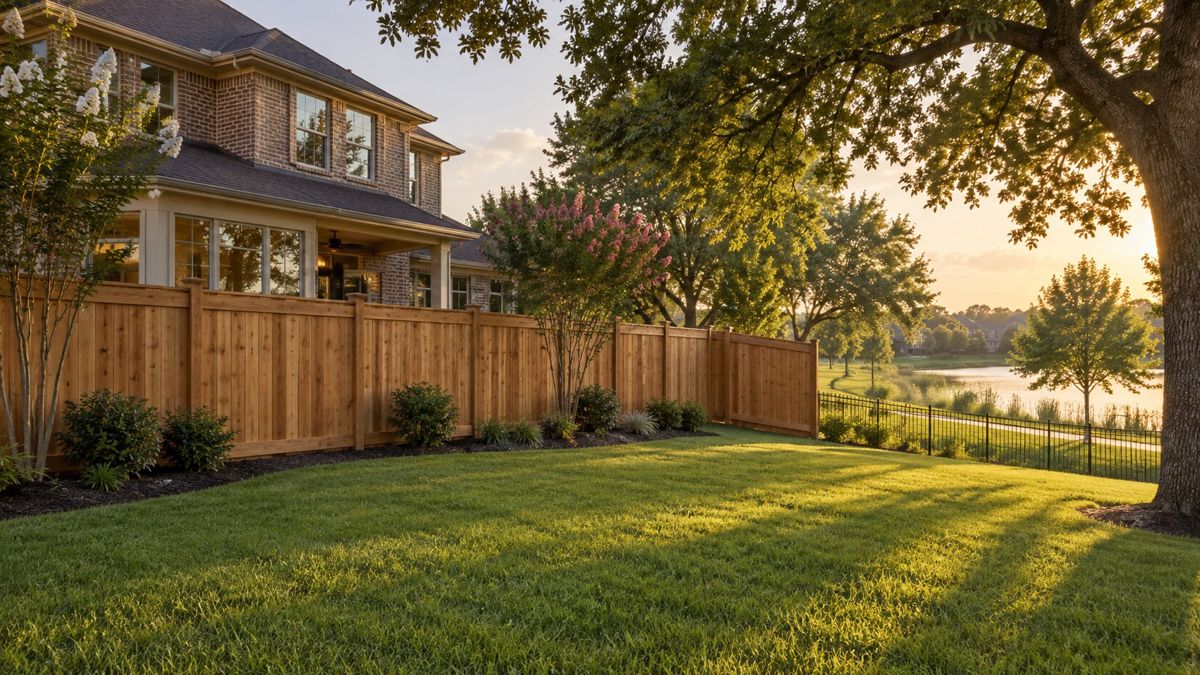
New cedar privacy fence behind a brick suburban home in Texas

Lakes, trails and community guidelines

Fence company in Bridgeland, TX: planned around community rules

Wood, vinyl, metal and gate work for Bridgeland yards. Send your lot details with a quote request and we will confirm availability and next steps.

  • Five fence types for Cypress homes and lots
  • HOA-minded planning before the first post
  • Repair and gate work after storm season
Free written estimates
Local crews
Clear timelines
Cleanup included

What Bridgeland homeowners usually want from a fence

Bridgeland is a master-planned community, and that shapes almost every fence decision. Homes are often newer, lots can be fairly compact, and the community usually publishes design guidelines that spell out fence style, height and color. Many yards back onto lakes, trails, parks or open green space, so a fence here is seen by neighbors and passersby as well as by you.

Most owners are after one of three things: privacy for a small backyard, a safe boundary for kids and pets, or an upgrade that matches the look of the street. We talk through the rules first and the materials second.

Water, clay and tight lots around Bridgeland

The ground in this part of northwest Harris County is often heavy clay, and newer subdivisions are graded so that rain runs toward swales and drains between lots. A fence has to cross those low spots without blocking the flow. Panels that sit too tight to the soil can trap water and rot early, while a gap that is too wide invites dogs and debris.

Newer lots also tend to be narrow, which leaves little room for equipment beside the house. Gate width, side access and the position of utility boxes all need to be checked before a single post hole is dug.

Fence services we can plan for Bridgeland yards

We serve Bridgeland with the five fence services covered across this site.

Cost is driven by a handful of general factors, and we show them in the quote instead of hiding them.

  • Length and corners. Every corner and gate adds posts and labor.
  • Material and height. Cedar, vinyl and metal behave and price differently, and the community may cap height.
  • Ground conditions. Soft clay, drainage swales and tree roots change how posts are set.
  • Access. Narrow side yards slow down delivery and digging.

None of this is unusual for a newer community, but it is worth hearing in plain language before you compare quotes.

Approvals and preparation before the crew arrives

Bridgeland owners generally need approval from the community before building, and the submission often asks for a drawing, a material description and sometimes a color sample. Check your own documents, because rules can differ between sections and can change over time.

Beyond approvals, a few simple steps keep a job moving:

  1. Confirm where your property lines sit, using your survey if you have one.
  2. Clear shrubs and toys away from the fence line.
  3. Tell us about sprinkler lines and low-voltage lighting.
  4. Expect utility locates to be requested before digging starts.

Asking for a Bridgeland fence quote, step by step

Use the quote form or call (281) 555-0191. We serve Bridgeland but are not based in the community, so your request is how we confirm availability.

  1. Tell us the street, the kind of fence you have in mind and any rules you already know.
  2. Add a few photos of the fence line, gates and any low or wet spots.
  3. We follow up with questions and arrange a look at the yard if needed.
  4. You receive a written quote that lists scope, materials and gates.
  5. If you agree, we talk through scheduling around weather and your approval timeline.

You can also read how we work before you decide.

Get a quote in Bridgeland

Tell us what you need and we call you back.

No obligation.

Step 1 of 3

What do you need?

Questions about Bridgeland

Do I need community approval for a new fence in Bridgeland?

In most master-planned communities the answer is yes. Design guidelines normally cover style, height, color and sometimes the side that faces the street. Check the guidelines for your section or ask the community office. We can describe the fence in the terms an approval form asks for, but the application itself usually comes from the homeowner.

Which fence type tends to suit lakefront or trail-facing lots?

Open metal fencing is a common choice because it keeps the view and is often easier to get approved than a solid wall of boards. Aluminum resists rust in humid air. A solid wood or vinyl fence gives more privacy, so some owners use metal on the water side and wood along the sides.

Will clay soil make my fence lean over time?

It can. Clay swells when wet and shrinks when dry, and that movement pushes on shallow posts. Setting posts deeper, using proper concrete footings and keeping water from pooling at the base all reduce the risk. A leaning section is worth looking at early because the lean usually gets worse after heavy rain.

Can you work around a drainage swale between two lots?

Yes, but it needs planning. The fence should not dam the swale, so panels are often raised slightly or a gap is left for water to pass. The right detail depends on how the lot drains. We look at the swale on site and explain the options in the written quote before any work starts.

How do storms affect a new fence in this area?

Gulf storm season brings strong gusts and soaked ground, and a solid fence acts like a sail. Deep posts, solid footings and sound fasteners matter more than the color of the boards. After a major storm, walk the fence line and look for leaning posts, loose pickets and gates that no longer latch.